Devlog 02042026
Devlog 02042026. Progress.
A lot has changed with the app recently. Three big things. Let me walk through them.
1. The Website Is Live
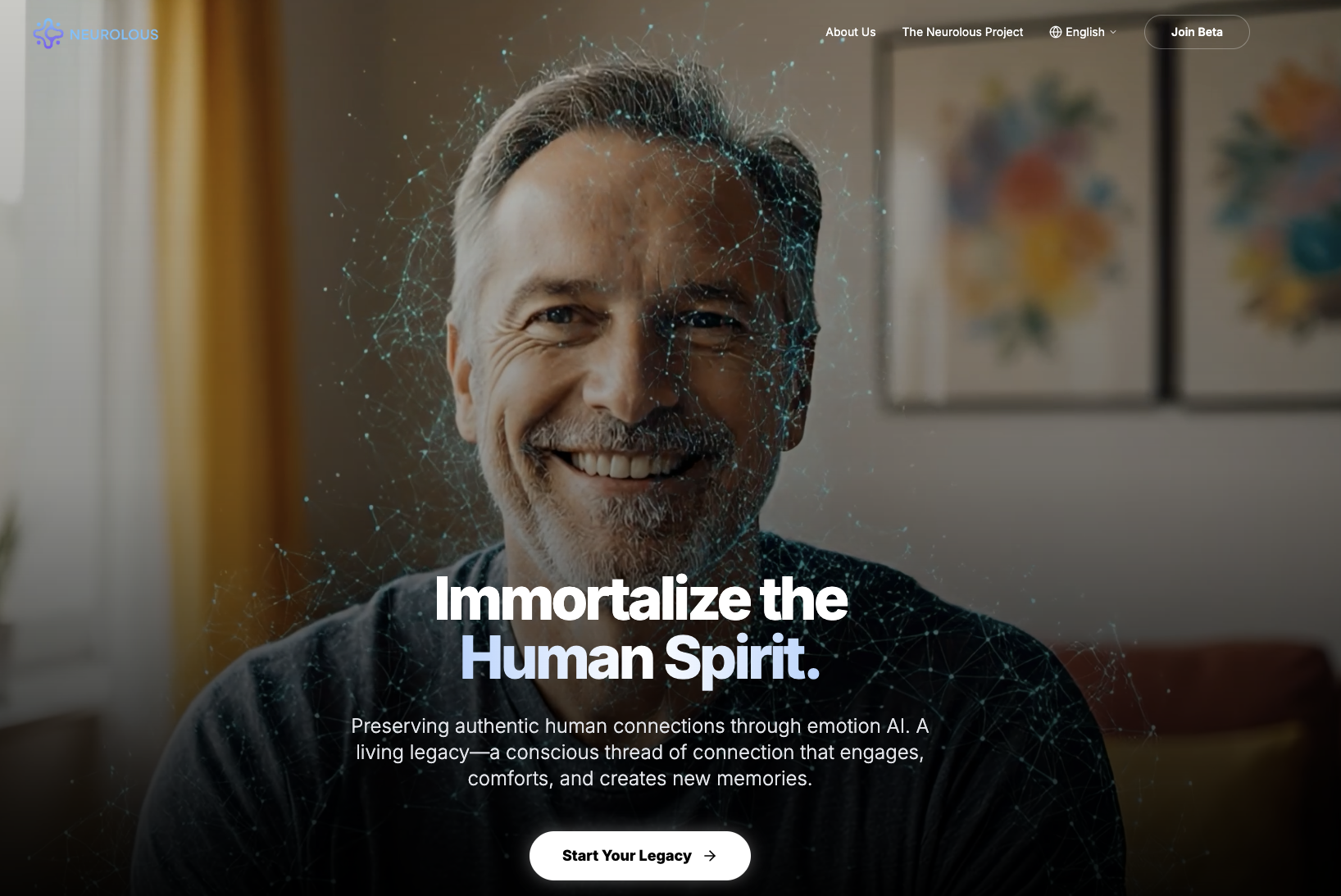
The Neurolous website is finally up. It's a place for you to learn about the app and download it. The iOS app is on TestFlight right now. Not publicly released yet, but you can click a link and get in. Before this, you had to email me directly to get access. Now it's just a link.
The app lets you create an AI agent to replicate yourself or your loved ones. Specifically loved ones who have passed. The reason I built this, which I've talked about many times, came from missing my father. Longing to hear that voice. Wanting to discuss current events, life things, with someone who isn't here anymore.
So. neurolous.com. Please sign up, try it out, and let me know what you think.
2. Open Source Version of the App
The open source version of the Neurolous app is now on GitHub. You can download it and run everything locally on your own computer. No cloud involved. Everything stays on your machine.
It features a local API backend and a frontend you can run in the browser, or through an iOS/Android app via Flutter. Voice cloning is handled through another open source project called Resemble Chatterbox TTS.
I developed it to run on a low power device. I use a Mac Mini M4 with 16GB of unified RAM at home, and it works fine. If you have something better, you'll get an even better experience because the server side will run faster and you can use a bigger model.
Why open source?
People have asked me this. If you have a subscription version, why release an open source version?
I did a lot of soul searching. And I came to the conclusion that if I'm serious about wanting this app to help people, if I'm serious about being a proponent of AI safety, then transparency was the way to go. Letting people see behind the hood was key.
There's also the privacy angle. We take extreme security precautions on the cloud version and are preparing for audits. But it's still your data about a person, on the cloud. I understand those concerns. Privacy is extremely important to me personally. So if you're more privacy conscious and you have the right compute at home, the open source version is there for you. Free forever.
The cloud version still has value. More features, bigger models, internet access, support for unlimited loved ones per user, a more curated experience. There's a two week free trial, then it goes to subscription. Different tools for different people.
3. The Research Portal
The third thing we introduced is the research portal. This is about AI safety.
The narrative evaluation tool takes your conversation data and runs it through a narrative evaluator. What it does is look for narrative manipulation and narrative deception in the transcript of your conversation with the AI.
The reason you want this is simple. You want to make sure you're not being manipulated or Jedi mind tricked by a machine.
How to use it on the cloud app:
- Go to your profile settings
- Toggle the radio button that says "Include me in the research"
- Navigate to the research portal on the web
- Log in with your credentials
- Download your anonymized data (all personally identifiable names are redacted)
- Run it locally with the Python script
The Python script and the methodology are on the neurolous-evals GitHub repo. Eventually, I may make this a web based tool so non developers can access it too. Maybe even a real time score inside the app itself. But for now, it's there, it's open, and you can see exactly how it measures things.
Something I've Been Thinking About
Here's something that's been on my mind.
People are manipulative and deceptive. These are human things. So if I've created a service to replicate a real person, and I do that accurately, then there are definitely people who were manipulative and deceptive in life. What does it even mean to have a narrative evaluator looking objectively for manipulation and deception?
I'm still figuring out how I feel about it. But I think there's value in the tool standing objectively and judging nonetheless.
Maybe it's actually a test of accuracy. If you know that a person used those tactics, and you create a version of that person, and the tool accurately scores the conversation as manipulative, then the replication is working. The AI is doing its job.
But it's one thing to be manipulated by a person. It's another thing to be manipulated by a machine. Even if the machine was built to simulate a real person who was deceptive. There's value in having that metric. In having another set of eyes to help break the spell.
The Bigger Picture
I'm excited to get this out there. The reason I started this whole project is trying to preserve humanity in a world where we are isolated and lonely and looking toward entertainment to fill that gap. Netflix, video games, social media.
I like to think of it this way. 150 years ago, we didn't have photography as cheaply and accessibly as we do today. In the past, you'd have a painter come and paint your loved one to capture that memory. Then technology progressed. Cameras, film, video. Now we have something arguably even better. AI to preserve the memories of ourselves and our loved ones.
We're in uncharted territory in terms of what this means psychologically. I'm definitely mindful of that. That's the reason I created the AI safety research. So we can start to study those effects. The last thing I want is for someone to be harmed by something I created to help.
What's Next
There's a huge backlog for what I plan to do with the apps. And I say apps because there's really like three or four of them at this point. My intention for the devlog is to share the journey as I add features and discuss the reasons why I'm adding them.
There's a human touch to all of this AI development. Scary times. Uncharted territory. I want you to see the reasons for why things are added and the justification behind them.
I don't plan to build in private. I want to build more in public. I don't always have time for these, but when I do, I'll share the journey.
Three Links
- Neurolous Website Download the iOS beta via TestFlight
- Open Source App Run it locally on your own hardware
- Neurolous Evals The narrative evaluation Python tool
Feel free to fork the repos, leave comments, suggest changes. I monitor them daily. And if this is a service you could use, let me know what you want. I've been building what I need for the past year, but I don't know what everybody else needs yet.
Thanks for reading. Until next time.